
Roots Vacuum Pump Price Guide 2026: Cost, Factors & Buying Tips
How much does a Roots vacuum pump cost in 2026? There is no single dependable price for every model or project. Publicly listed prices include five-figure reseller examples for specific branded mechanical boosters, but those examples do not represent all suppliers or models. Even within those listings, the included equipment, specifications and delivery terms may differ. A bare Roots booster is not the same purchase as a matched booster-and-backing-pump package or an engineered vacuum system.
For an industrial buyer, the useful question is not only “What is the price of a Roots vacuum pump?” but also “What pumping performance and equipment are included?” The examples and comparison criteria below can help you request an accurate quotation without comparing unlike products.
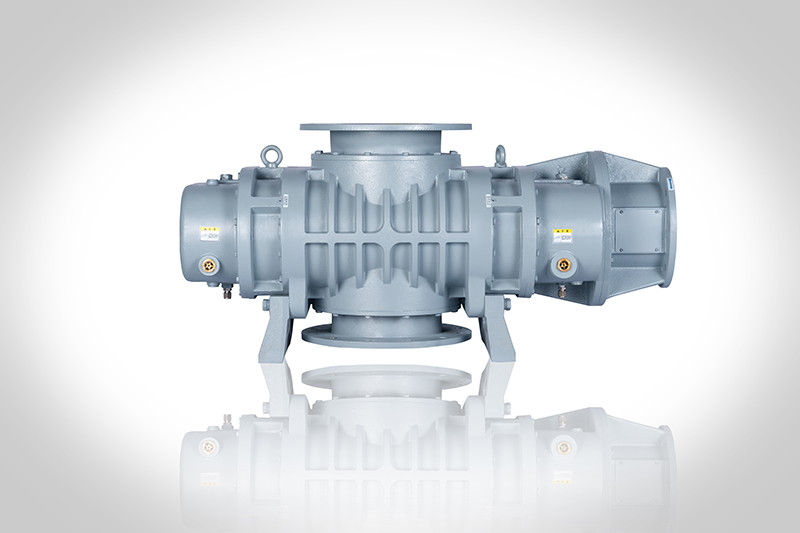
Roots Vacuum Pump Price Examples in 2026
The following are publicly advertised reseller prices recorded on November 16, 2026, not average market prices or quotations from VACCULEX. All prices are in US dollars. Product availability, taxes, freight, import charges and final transaction terms may change. The seller pages are cited to make the examples traceable, not to recommend those products.
| Seller and listed product | Advertised price | Listing details and limits |
|---|---|---|
| Leybold RUVAC WAU 501 — Labvac reseller | US$15,439.20 | Reseller lists nominal speed of 606 m³/h and displayed Sold Out on November 16, 2026. Product listing |
| Leybold RUVAC WAU 1001 — Labvac reseller | US$21,654.40 | Reseller lists nominal speed of 1,200 m³/h and displayed Sold Out on November 16, 2026. Product listing |
How to interpret this table: These two dated listings are from the same reseller and are not an industry price survey. Both were marked sold out when checked. They do not establish currently purchasable prices, a price range for all Roots pumps, or the price of a complete installed system. Compare verified model specifications and scope of supply—not the figures alone. Prices and availability can change; refer to the linked listings for updates.
For a project-specific price, send the operating-pressure range, process gas, required capacity and intended supply scope to VACCULEX. Ask the supplier to list the pump model, backing-pump requirement, accessories, exclusions and commercial terms in writing.
Roots Booster Price vs. Complete Vacuum System Cost
A Roots vacuum pump is commonly used as a mechanical vacuum booster. Many industrial Roots boosters need a backing pump to remove the discharged gas and maintain a suitable outlet pressure. Depending on the design, the vacuum package may also require a bypass, pressure protection, controls, instruments or cooling provisions. The equipment included in the quotation has a major effect on its total price.
| What you are buying | Items to confirm in the quotation | When it may fit |
|---|---|---|
| Roots booster only | Booster model, drive motor, seals, connections, documentation and exclusions | An existing system already has a compatible backing pump and verified controls |
| Roots booster + backing pump | Both pump models, matching calculations, startup sequence, protection, controls and base frame | The buyer needs a coordinated pump combination |
| Complete vacuum system | Pumps, valves, piping, instruments, electrical cabinet, cooling provisions, testing and installation boundaries | A new line or retrofit requires an integrated package |
| Application-specific system | Gas-compatible materials, seal arrangements, condensate handling, safety controls and required documentation | Process conditions require more than a standard pump set |
A higher system quotation can include items that a lower pump-only quotation excludes. Before comparing offers, request an itemized scope of supply and identify what must be purchased or engineered separately. VACCULEX lists industrial vacuum pump and system options for buyers evaluating different configurations.
How Pumping Speed and Operating Pressure Affect Price
Nominal pumping speed, often stated in m³/h, is useful for identifying the size of a Roots booster. But it is not the effective pumping speed of the complete system at every pressure. Actual performance depends on the backing pump, gas load, pressure range, pipework and pump-control arrangement. Two pumps with similar rated capacities may deliver different results in the same process.
For a fair comparison, request the following information for each proposed model:
- Nominal pumping speed and the basis on which it is rated.
- Effective system pumping-speed curve over the intended operating-pressure range.
- Maximum permissible pressure difference between the Roots booster inlet and outlet.
- Recommended backing-pump model and capacity.
- Startup method, bypass or variable-speed protection, and any pressure interlocks.
- Motor power, utilities, cooling needs and continuous-duty limitations.
A conventional Roots vacuum booster generally is not used as a stand-alone atmospheric exhaust pump. It works with a forevacuum or backing pump; designs with bypass or controlled speed may allow different startup procedures. Any allowable operating pressure or differential-pressure figure must come from the specific pump datasheet, not a generic Roots pump claim. See Leybold’s Roots pump operating guidance.
Six Factors That Change Roots Vacuum Pump Cost
1. Process duty and required capacity
Chamber volume, gas throughput, desired evacuation time and normal operating pressure determine the required system capacity. An oversized booster may increase equipment and operating costs; an undersized system may fail to meet the process cycle. Select from the required duty point rather than a nominal m³/h figure alone.
2. Pressure limits and startup protection
The permitted inlet-to-outlet pressure difference can determine whether the system needs a pressure switch, bypass, frequency converter or special startup sequence. These items affect both equipment cost and safe operation. A claimed ultimate pressure should be evaluated for the complete pump combination, not attributed to the Roots booster alone.
3. Backing-pump technology
The backing pump must suit the process gas, pressure range and operating conditions. A rotary vane pump may be appropriate for compatible general-duty gases. A dry screw vacuum pump may be considered where an oil-free gas path is important. A liquid ring vacuum pump may suit selected wet or vapor-containing duties. None of these choices is automatically best for an entire industry; gas compatibility and system design still need confirmation.
4. Gas compatibility, seals and materials
Solvents, condensable vapors, particles or corrosive gases can call for filtration, condensate management, specific seals or materials, and additional protection. Hazardous or flammable mixtures require an appropriate safety assessment. Do not assume that a pump is corrosion-resistant or certified for a hazardous area without model-specific documentation.
5. Motor, cooling and control requirements
Voltage and frequency, variable-speed drives, cooling arrangements, sensors and automation interfaces can change the quote. Ask which controls and protective devices are included and which are supplied by the plant.
6. Supply scope and commercial terms
A supplier may quote a pump ex works, an FOB shipment, or a more extensive delivered package. Freight, duties, commissioning, spare parts and service obligations can alter the installed cost. Compare quotations only after aligning the delivery basis and exclusions.
Application Requirements That Can Affect Your Quotation
The application helps define the equipment, but a label such as “chemical” or “pharmaceutical” does not by itself establish a price tier.
| Application | Conditions to specify | What may affect the quote |
|---|---|---|
| Vacuum drying | Chamber size, moisture/vapor load, target pressure, batch cycle | Condensation control, pump-down speed and backing-pump choice |
| Chemical processing / distillation | Gas composition, solvent content, temperature, corrosion and area classification | Materials, seals, vapor handling and protection |
| Metallurgy / vacuum furnace | Vessel volume, operating-pressure profile, temperature and gas throughput | Pump combination, controls and thermal requirements |
| Food processing | Gas and water-vapor load, cleaning requirements, process hygiene needs | Condensate handling and appropriate equipment configuration |
| Pharmaceutical processing | Process requirements, contamination controls and documentation needs | Cleanliness controls, materials and any validation obligations |
| Vacuum coating | Chamber volume, pump-down time and pressure stages | Effective pumping performance and integration with other vacuum equipment |
For the pump’s operating principle and common applications, see What Is a Roots Vacuum Pump?. For available product options, see the VACCULEX Roots vacuum pump range.
What to Include in a Roots Vacuum Pump RFQ
A useful quotation request gives suppliers enough information to propose and price the same duty and supply scope:
- Process: application, batch or continuous operation, hours per day and expected operating cycle.
- Pressure: starting pressure, normal operating pressure and target pressure, with units.
- Capacity: chamber volume, gas load, target evacuation time or effective pumping-speed requirement.
- Gas: composition, temperature, water or solvent vapor, particles and any corrosive, toxic or flammable components.
- Site conditions: voltage, frequency, cooling utilities, space constraints and location requirements.
- Existing equipment: current backing-pump model, available performance data and connection sizes, if applicable.
- Supply boundary: booster only, paired pumps or a complete system, including controls, valves and instruments.
- Commercial details: quantity, delivery location, required documentation, spare parts and quotation currency/terms.
When comparing offers, request a pump or system performance curve, a clearly itemized scope of supply, expected power consumption under the specified duty and a list of exclusions. This will usually be more useful than comparing nominal pumping speeds or headline prices alone.
Purchase Price vs. Long-Term Operating Cost
The lowest initial offer may not produce the lowest total ownership cost. Consider energy use at the actual operating point, backing-pump maintenance, consumables, service access, spare parts and the cost of downtime. Avoid oversizing, but do not remove pressure protection, sealing or safety equipment that the process requires.
Where gas loads or pressure conditions vary, ask whether a properly designed startup sequence or speed control can improve the operating profile. Any claimed energy saving needs to be checked against the actual duty cycle and proposed system.
FAQ: Roots Vacuum Pump Price in 2026
How much does a Roots vacuum pump cost in 2026?
Public prices differ substantially by model and supplier. The dated November 2026 examples above show two branded booster reseller listings from one seller. They do not establish an industry-wide price range or a VACCULEX selling price. Request a model-specific quotation for your required duty and equipment scope.
Is a backing pump included in a Roots vacuum booster price?
Not always. Some offers cover only the Roots booster and motor. Ask for a list of included and excluded items, including the backing pump, valves, controls, instruments and base frame.
Can a Roots vacuum pump work without a backing pump?
Most industrial Roots vacuum boosters require a suitable backing pump. Certain bypass-protected or controlled designs may start at higher pressures, but they still operate as part of an appropriately engineered vacuum system.
Why are Roots vacuum pumps with similar pumping speeds priced differently?
Nominal speed alone does not describe system performance, allowable pressure difference, material compatibility, control equipment or the commercial package. Request performance data and comparable scope-of-supply details before judging price.
Which backing pump works best with a Roots booster?
It depends on the gas, condensables, required pressure and operation. Rotary vane, dry screw and liquid ring backing pumps serve different duties. The proposed combination should be checked against the booster manufacturer’s operating limits.
How much does a complete Roots vacuum pump system cost?
A complete-system price must account for both pumps, instruments, controls, piping, protection and application-specific requirements. Without a defined process and bill of materials, a credible universal system price cannot be given. Request an itemized system quotation instead of extrapolating from a pump-only listing.
Request a Roots Vacuum Pump Price From VACCULEX
VACCULEX offers Roots vacuum pumps and related vacuum-system products. If you are deciding between a booster-only purchase and a complete package, provide your process details so that pump matching and the requested quotation scope can be reviewed.